
· Maeve Sutton
Pregnancy pillow filling: microbeads, kapok or fiber — which to choose?
This is the subject almost nobody covers, and yet it is the filling that decides the support, the upkeep, and one detail you will only discover on the third night: the noise.
The four families of pregnancy pillow filling
| Filling | Support | How it holds up | Washing | Noise |
|---|---|---|---|---|
| Polyester fiber | Medium, mouldable | Puffs back up with a shake | Cover in the machine, pillow aired | Silent |
| Microbeads | Very close-fitting | Settles markedly | Cover only | Audible rustle |
| Kapok | Firm | Stable, settles little | Cannot be washed | Silent |
| Foam | Constant, barely mouldable | Very stable | Cover only | Silent |
Polyester fiber
This is the most common filling, for a simple reason: it does the three things asked of it properly. It moulds under the bump, it comes back to its volume when you shake it, and it makes no noise when you turn over.
It is the easiest of the four to look after: the cover goes in the machine, and the pillow itself is reshaped by hand. It is also the only one you can top up — a few handfuls of fiber are enough to bring back the original support if an arm has flattened. Our U-shaped pregnancy pillow belongs to this family: it is filled with loose synthetic fiber, which you can redistribute by hand and which makes no noise at all. The stated filling is PP — polypropylene fiber.

Microbeads
These are tiny expanded polystyrene beads. They follow the body very closely, almost like sand: the feel is immediately pleasant, and that is what sells them.
Two characteristics only show up in use. First, they settle: the volume drops week after week, and there is no way to get it back. Second, they make noise — a dry rustle with every movement. On an object whose whole job is to stop you waking up, that is worth knowing.

Kapok
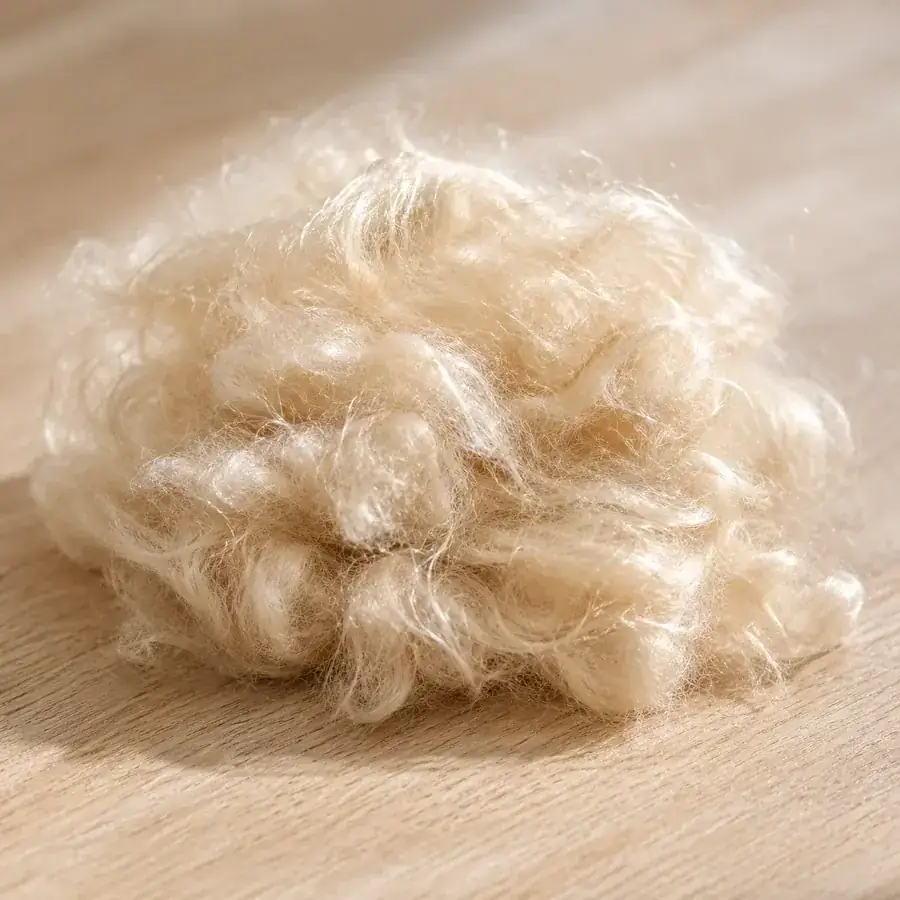
A plant fiber from a tropical tree, kapok is firm, light and natural. It settles little and holds up well. Its limitation is clear: it cannot be washed. Once damp, it clumps and does not recover. On a bedding item used every night for months, and then through feeding, that is a real limitation. It costs It also costs noticeably more.
Foam
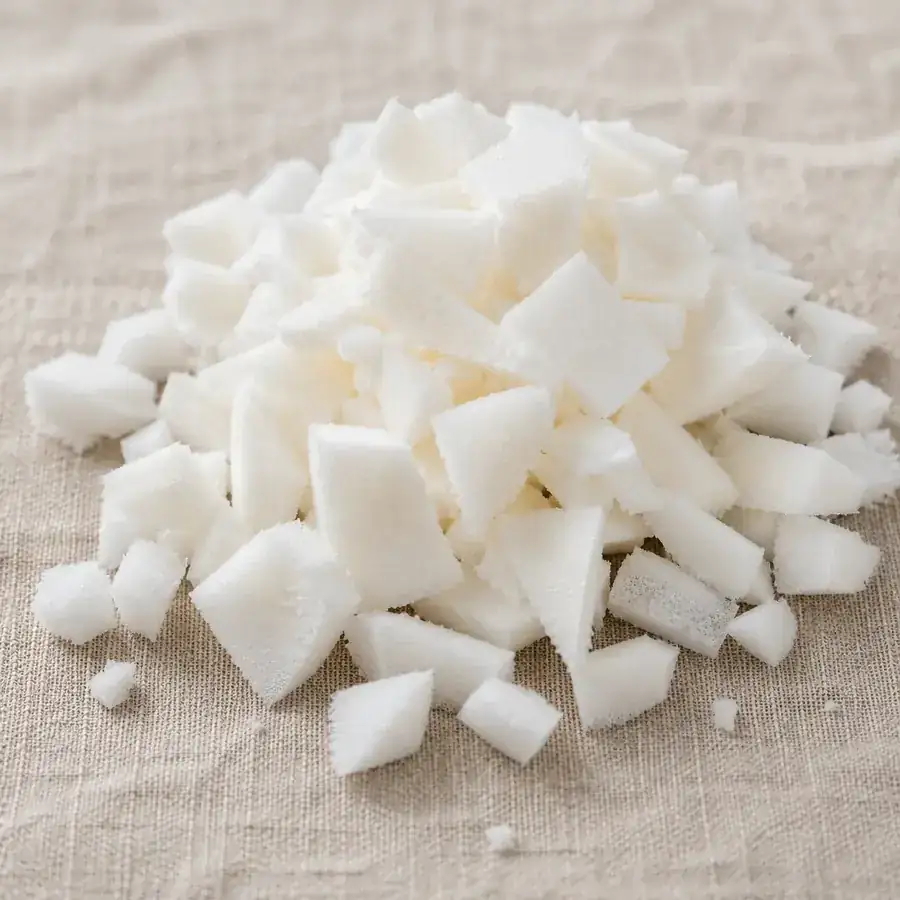
In blocks or shredded, it gives very constant support: the pillow keeps exactly the same shape, night after night. That is an advantage if you want a stable rest, and a drawback if you want the pillow to mould to your position. It cannot be washed either, and it is heavier to handle.
What actually matters in a pregnancy pillow filling
Ask yourself three questions, in this order:
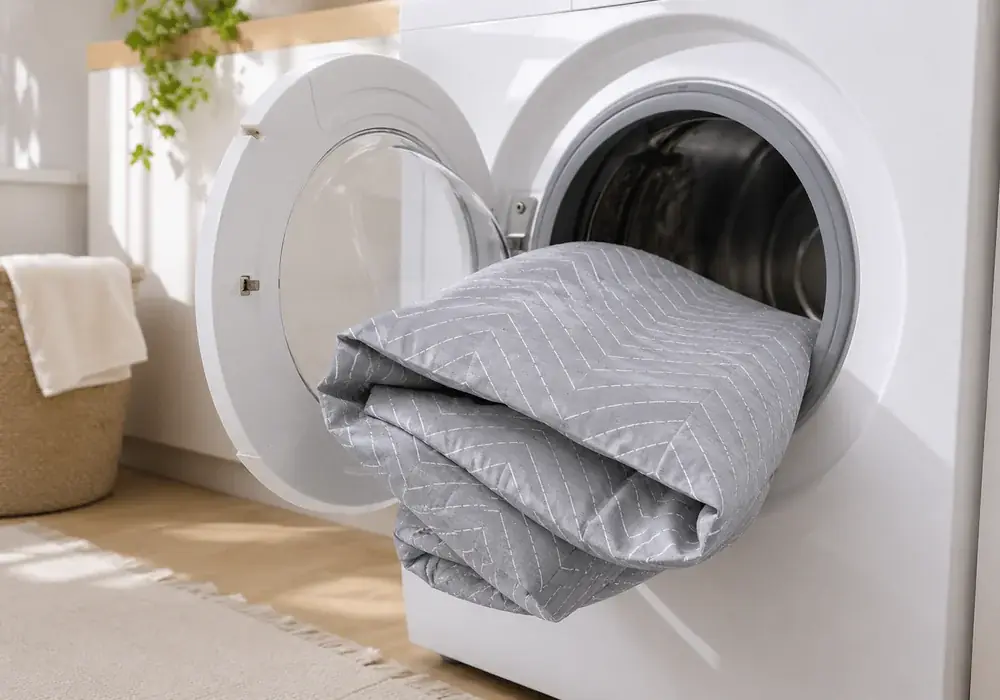
- Will I be able to clean it? A pregnancy pillow goes through months of nights and then the feeding months. A removable washable cover is not a comfort — it is what decides how long the thing lasts.
- Will it hold its volume? A filling that settles leaves you with a pillow that “does nothing any more” after three weeks. We go through it in our guide on firmness.
- Does it make noise? No product page mentions this. Ask, or choose a filling that stays silent.
Which pregnancy pillow filling for feeding?
The priorities change: you want a stable rest at chest height, over seated sessions of twenty to forty minutes. A filling that collapses under the forearm forces you to keep lifting your arm. Fiber and foam suit this well; microbeads, which move under pressure, less so. See our nursing pillow.
The properties described are those of the filling families themselves, not measurements of our product.

Maeve Sutton · Editorial lead at Lullacurve
Maeve writes the guides on this site: sleeping positions, filling and firmness, bed space, and caring for a pregnancy or nursing pillow.